
EV guests plan around charging
Travellers are more confident booking when they know they can charge where they stay.
Low-cost deployment
Destination Charge owns the outlet hardware. Hosts cover installation only, with no monthly fees and no extra admin. We manage charging, payments, support, and power reimbursement.
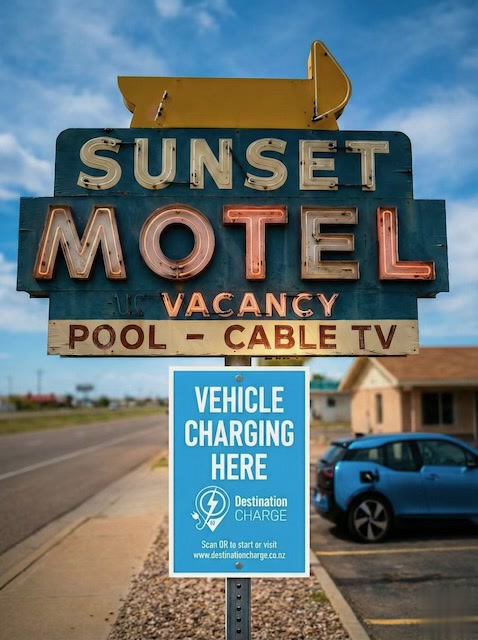
Offer managed overnight EV charging at the places guests already park, without becoming a charging operator.
The strongest host sites already have one important thing: cars parked for hours.
Travellers are more confident booking when they know they can charge where they stay.

Motels, holiday parks, cabins, apartments, workplaces, and car parks often already have long stay parking.

A lower power outlet can still be useful when a vehicle is parked for 8 to 14 hours.

Guests activate and pay from their phone instead of asking reception to manage charging.
Fast charging is for short roadside stops. Host sites are different. When a car is parked for hours, lower power charging can still add useful range while keeping the hardware, installation, and operating model much simpler.
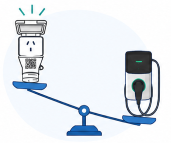
A driver does not usually need a rapid charge while parked for hours. They need a practical way to add range before they leave.
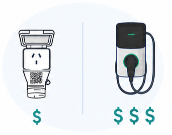
Because the system is designed for long dwell time rather than rapid charging, sites can start with managed outlets instead of expensive high power chargers.
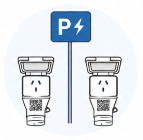
Many hosts can begin with one or two outlets, learn from demand, and expand only when it makes sense.
Many motels and accommodation sites already have the electrical availability and site infrastructure needed to support slow, consistent charging. A Destination Charge outlet uses about the same power as a plug-in wall heater, but steady charging over a long stay can add up to useful range.
One managed outlet is a modest, steady load compared with high-power rapid charging equipment, subject to electrician assessment.
The value comes from consistent charging over 8 to 14 hours while the vehicle is already parked.
Most guest charging happens overnight, when site activity and wider electricity demand are often lower than daytime peaks.
The host model works because charging happens while the driver is already parked on site.
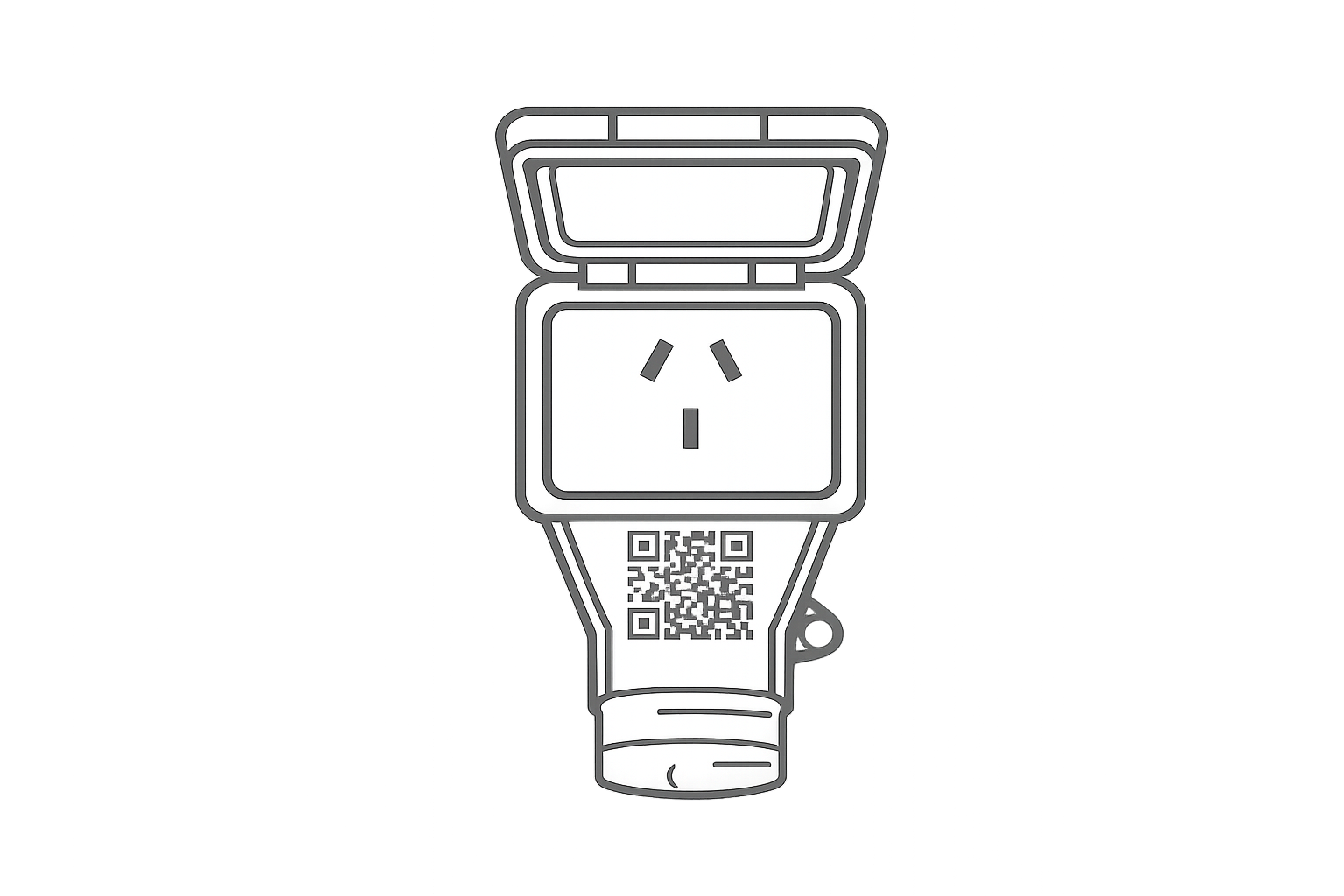
Hosts should not need to run a charging desk or buy the outlet hardware upfront. The host cost is installation, while DC retains ownership of the hardware and provides the managed layer around it.
DC retains ownership of the outlet hardware, so hosts cover installation rather than buying the hardware upfront.
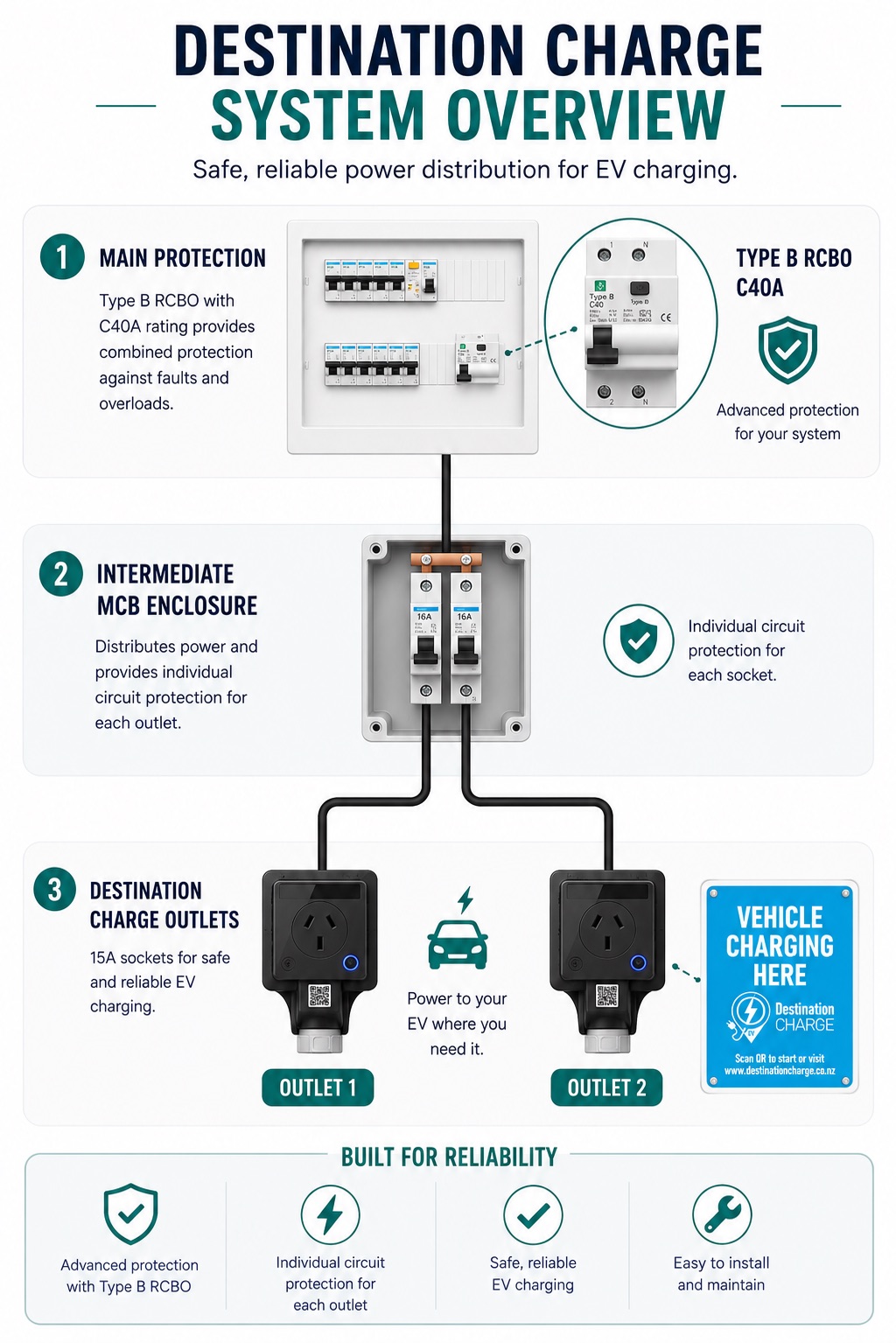
Each outlet has a site specific QR code so guests start the correct charging session.
Drivers review the price and pay through the charging flow before or during the session.
Sessions are tracked so charging activity, energy use, and outlet status can be reviewed.
Drivers have a clear support route if they cannot activate or need help.
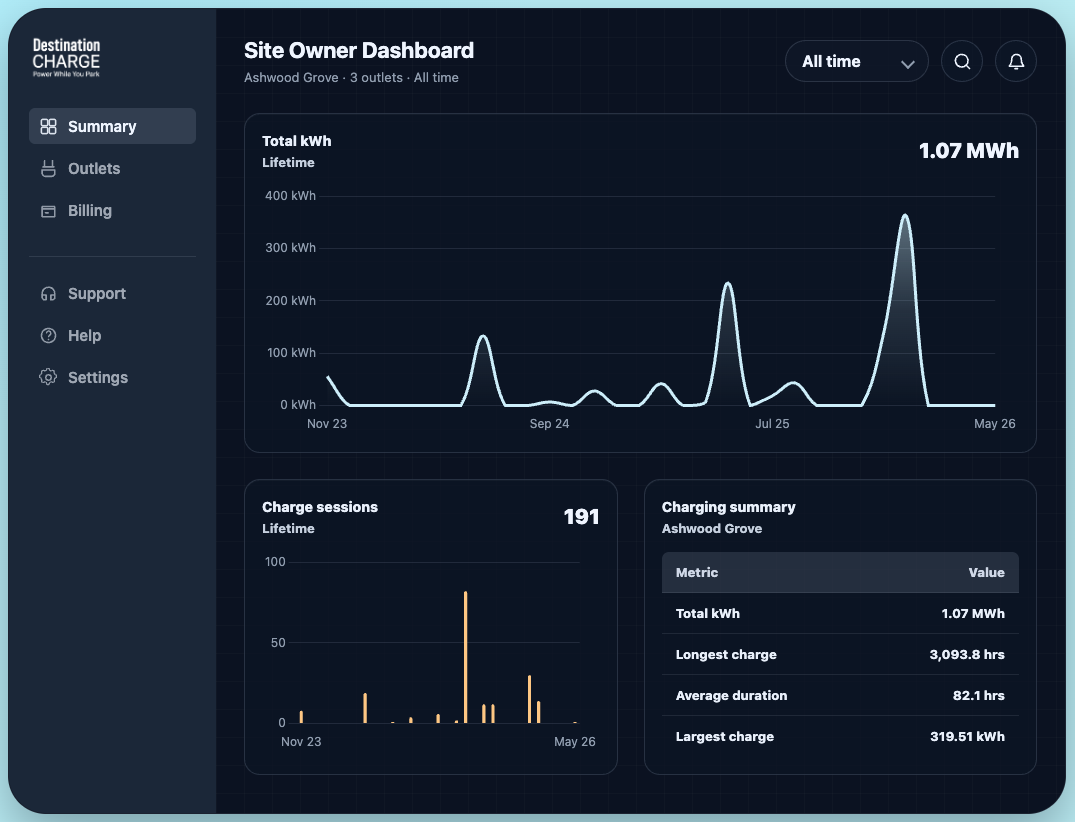
Hosts can view outlet status and site activity through the host dashboard.
Destination Charge reimburses host power use according to the agreed site arrangement.
Hosting is practical when the site has suitable parking, electrical access, and permission to install.
A bay or parking area where vehicles can safely remain for several hours.
A practical route to suitable power, subject to electrician assessment.
Approval to install the outlet, sign, and any required electrical protection.
Basic information about parking, likely demand, guest access, and site layout.
The best sites are places where vehicles already park for long periods and drivers can easily find the charging bay.
Guests, residents, staff, or visitors regularly leave cars parked long enough for charging to be useful.
Suitable parking bays are near a building, switchboard, or practical cable route for electrician assessment.
The charging area is easy to explain, signpost, and access without creating confusion for guests or staff.
The site can offer charging as a managed amenity, not a manual front desk payment process.
Some host types have specific parking patterns and guest questions. Motel operators can review the dedicated motel charging page before starting a general host enquiry.
Own or manage a motel? See how managed overnight charging can work for motel parking, guest self activation, power reimbursement, and a simple site assessment.
Dashboard visibility
The Site Owner Dashboard gives hosts a practical view of outlet status, charging activity, total kWh, usage trends, and support context.
Before electrical work
The host cost is installation, subject to layout and suitability. There is $0 upfront hardware cost because DC retains ownership of the outlet hardware. Start with a suitability check so obvious fit issues can be found before committing to electrical work.
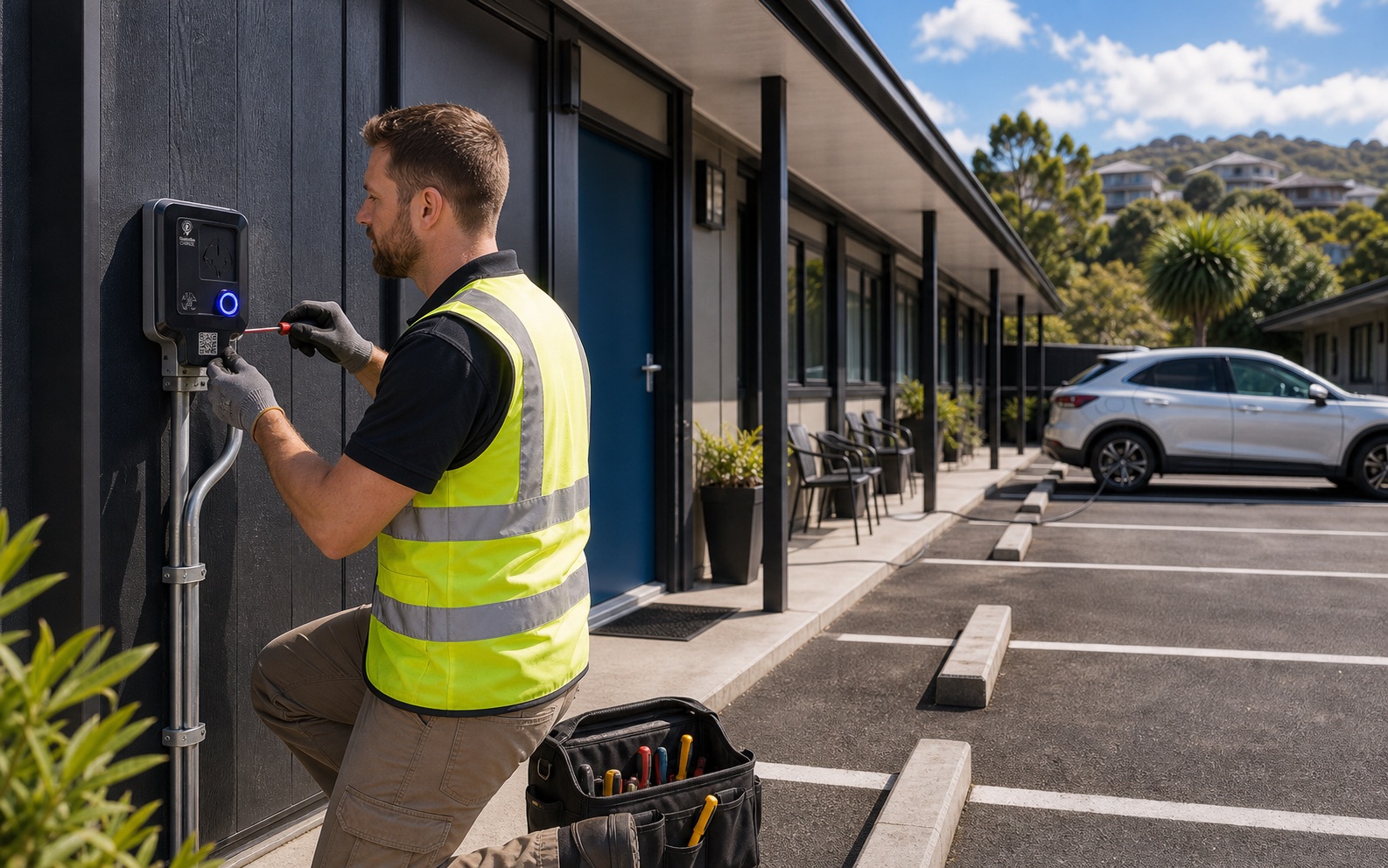
Typical installation
A common first stage is two managed outlets protected through suitable electrical hardware and installed by a licensed electrician. Final design depends on the site layout, switchboard access, cable route, and electrician assessment.
The key questions hosts ask before checking a site.
The system is designed to minimise staff work. Guests self activate, usage is tracked, and Destination Charge supports the charging process. Staff can usually direct guests to the QR code or support contact instead of calculating power or taking charging payments.
Destination Charge tracks guest charging usage and reimburses hosts for electricity used by guest charging sessions.
Installations are completed by a licensed electrician after site suitability, cable route, switchboard access, and outlet location are assessed.
No. Destination Charge is designed for low, steady overnight charging where vehicles are already parked for hours. It is a different use case from public rapid charging.
Yes. Many suitable sites can start with one or two outlets, then consider more if guest demand grows and the site remains electrically and operationally suitable.
The guest message is simple: bring a suitable portable EV charger, use the labelled Destination Charge outlet, scan the QR code, review the price, and charge while parked.
Destination Charge supports the guest charging process, while site staff can direct guests to the outlet QR code or support contact.
Share the basics about your site so suitability can be reviewed before electrical design or installation work.